

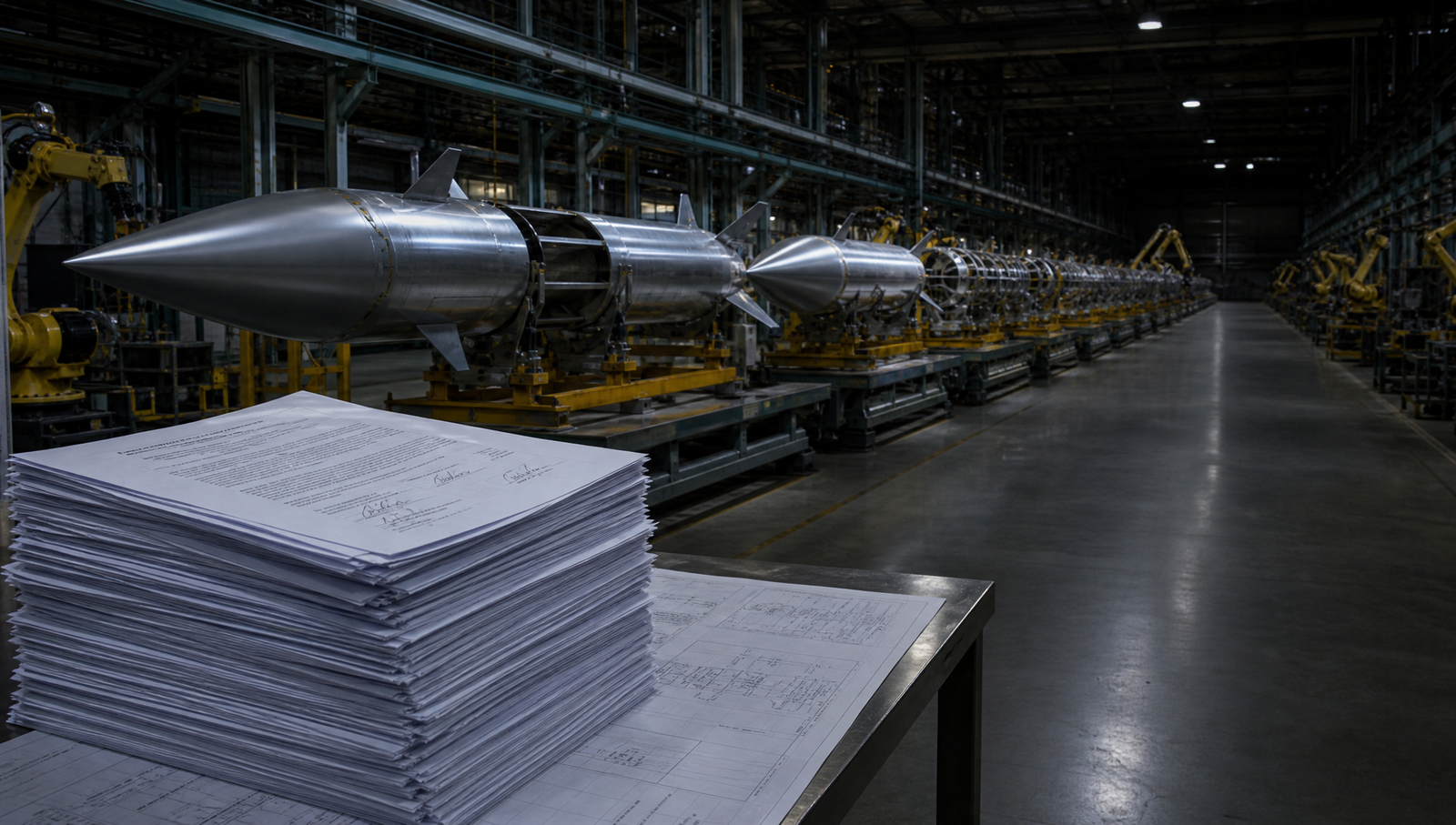

Defense contracts worth tens of billions of dollars have been awarded to replenish missile stockpiles depleted during the 39-day conflict with Iran, but budget documents show many of the replacement weapons will not begin arriving until 2029 or 2030 as production schedules stretch and supply-chain restrictions tighten.
- The Pentagon faces a multi-year delay replenishing missile stockpiles following the thirty-nine-day conflict with Iran.
- Lockheed Martin secures a $35.3 billion THAAD contract, yet delivery for Patriot and Tomahawk missiles remains stalled until 2029.
- Tightening U.S. sourcing rules for Chinese minerals and rare earth elements threaten production schedules for advanced munitions.
The gap between funding and delivery is emerging as one of the Pentagon’s biggest industrial challenges following the conflict, according to U.S. budget documents, defense contract records and an analysis by the Center for Strategic and International Studies (CSIS).
On June 24, the Pentagon awarded Lockheed Martin a $35.3 billion contract for Terminal High Altitude Area Defense (THAAD) interceptors, while the White House asked Congress to approve an $87.6 billion emergency supplemental package that included funding to replenish precision-guided munitions and expand the defense industrial base.
The contracts authorize production. Budget schedules show the missiles themselves will take years to arrive.
Replenishment Timelines Extend Into 2030
According to FY2027 budget justification documents analyzed by CSIS, the Pentagon is seeking funding for 857 THAAD interceptors, 3,203 Patriot interceptors, and 785 Tomahawk cruise missiles following heavy expenditures during the Iran conflict.
Have a development worth tracking?
Share product launches, funding announcements, partnerships, research findings and market developments with The Grey Terminal's readership.
→ Submit a Press ReleaseThe same documents project the first deliveries from those replenishment requests to begin in mid-2029 for THAAD interceptors, May 2029 for Patriot interceptors and March 2030 for Tomahawk missiles.
CSIS estimated that the conflict consumed between one-quarter and more than three-quarters of inventories across several key missile systems, including THAAD, Patriot and Tomahawk weapons.
The analysis also noted that historical production rates remain well below the quantities now being requested. THAAD deliveries averaged fewer than 30 interceptors annually over the past five years, while Tomahawk production has averaged fewer than 100 missiles a year over the past decade.
Supply Chain Rules Are Tightening
The production schedules coincide with new sourcing requirements affecting materials used in advanced defense systems.
China placed samarium and several other rare earth elements under export licensing requirements in April 2025. Separately, U.S. procurement rules scheduled to take effect on Jan. 1, 2027 expand restrictions on defense components derived from Chinese supply chains, extending requirements beyond finished magnets to cover minerals that are mined, refined, separated or melted in China.
Those policies affect components used across multiple precision-guided weapons programs, including high-performance permanent magnets found in missile guidance systems.
Several U.S. suppliers have sought alternative sources of rare-earth materials, including inventories held at processing facilities in Europe, according to industry reports.
Previous Procurement Disruptions Show Compliance Risks
The Defense Department has previously delayed weapons deliveries because of sourcing requirements.
In 2022, the Pentagon temporarily halted deliveries of the F-35 fighter after determining that a magnet used in an engine component contained an alloy produced with Chinese-origin material. Deliveries resumed only after the department issued a national security waiver while an alternative supply chain was established.
The case demonstrated that compliance reviews can interrupt procurement even after manufacturing has been completed.
Production Capacity Faces Growing Demand
The replenishment effort also comes as existing production lines continue supplying U.S. allies and partners.
Budget documents show the Pentagon has adjusted delivery schedules for some missile programs to prioritize domestic inventories. Public reporting has also indicated delays affecting previously approved foreign military sales, including Tomahawk deliveries to Japan and Patriot interceptor orders for other partners.
Meanwhile, additional litigation, export controls and industrial expansion efforts continue to reshape the defense supply chain beyond the United States. More than two dozen states are pursuing separate technology-related cases involving youth safety and consumer protection, while Washington has expanded efforts to reduce dependence on Chinese critical minerals across multiple strategic industries.
For the Pentagon, however, the immediate challenge remains production.
Congress has authorized new spending, contracts have been awarded and manufacturers are expanding capacity. According to current budget schedules, many of the missiles intended to replenish inventories depleted during the Iran conflict will not begin entering U.S. stockpiles for another three to four years.
Activate Terminal Layer
Structural analysis of the systems, pressures, and stakeholders behind this story.