

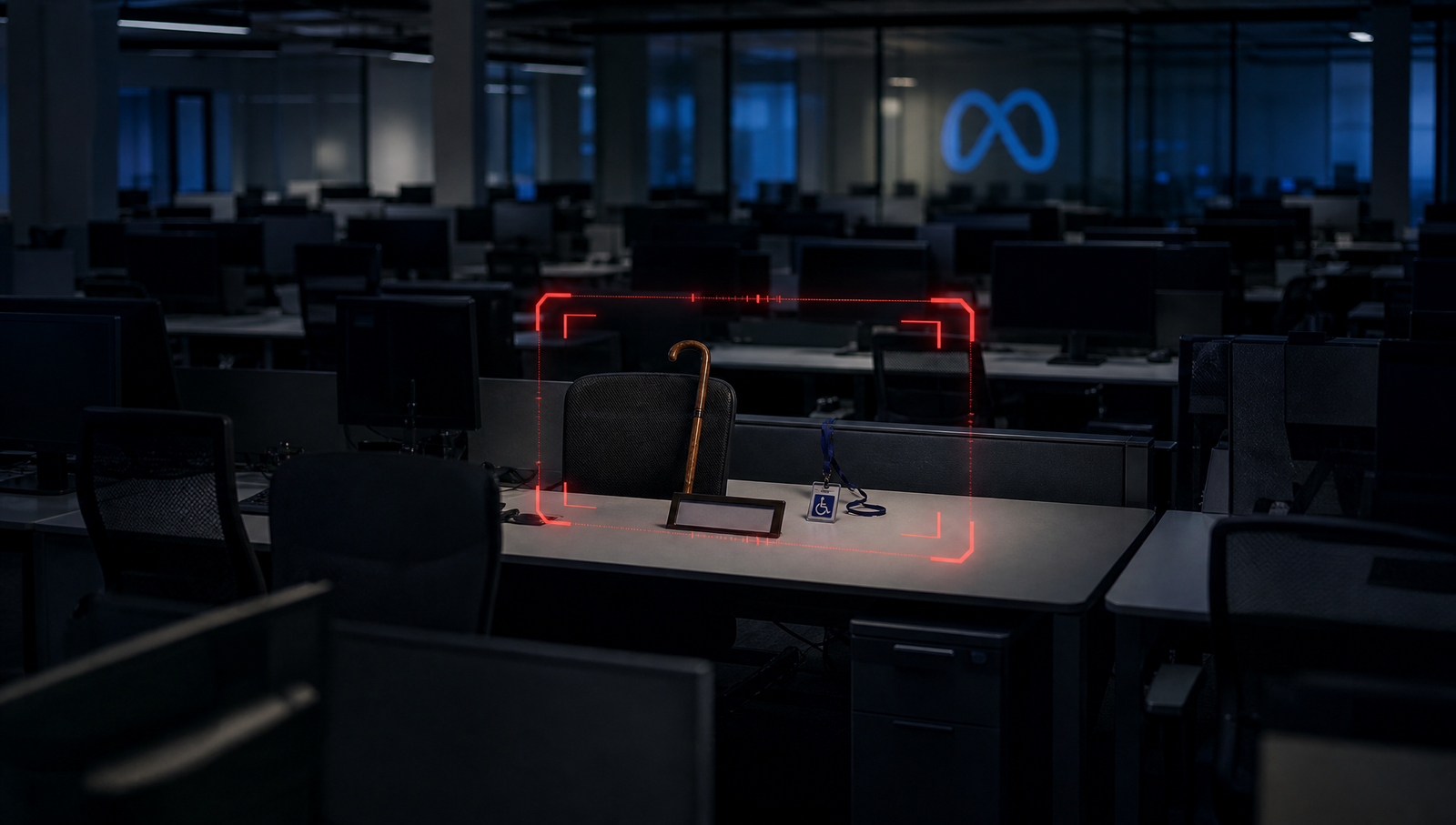

A federal lawsuit against Meta is putting a growing workplace question before the courts: where does human judgment end and AI-assisted decision-making begin?
- Meta faces a federal lawsuit from twenty-six former employees alleging AI-generated metrics disproportionately targeted workers with disabilities during recent layoffs.
- The May 2026 workforce reduction eliminated 10 percent of total staff as the company accelerated its internal artificial intelligence investments.
- This legal challenge tests whether automated productivity signals produce discriminatory outcomes even when human managers authorize the final termination decisions.
Twenty-six former employees allege the company relied on AI-generated workplace metrics that disproportionately affected workers with disabilities and employees on medical or family leave during layoffs announced earlier this year. Meta rejected the claims, saying managers, not artificial intelligence, made the final employment decisions.
Filed in the U.S. District Court for the Northern District of California, the lawsuit argues that Meta incorporated AI-assisted productivity measurements and internal performance signals into its layoff process without adequately accounting for legally protected absences. The case could become an early legal test of how companies use AI-generated workplace data as artificial intelligence becomes more deeply embedded in human resources.
Workers Allege AI Metrics Influenced Layoffs
The complaint centers on Meta’s May 2026 workforce reductions, which eliminated roughly 10% of the company’s employees as it accelerated investment in artificial intelligence.
According to the lawsuit, Meta used a combination of internal software tools and AI-assisted systems to evaluate employees during the layoffs. The complaint alleges those systems incorporated productivity indicators, collaboration data and AI-related usage metrics that favored employees with continuous workplace activity.
Have a development worth tracking?
Share product launches, funding announcements, partnerships, research findings and market developments with The Grey Terminal's readership.
→ Submit a Press ReleasePlaintiffs argue the approach placed workers on medical leave, family leave or with disabilities at a disadvantage because their employment records naturally reflected periods of reduced activity protected under federal and state law.
The lawsuit seeks damages and injunctive relief while asking the court to block additional terminations tied to the challenged evaluation process.
Meta Says Managers Made the Final Decisions
Meta denied that artificial intelligence independently determined who would lose their jobs.
A company spokesperson told Reuters the allegations “lack merit and are not based on facts,” adding that employment decisions “were and are made by people, not AI.”
The company has not publicly detailed how AI-generated workplace information may have been incorporated into managers’ evaluations or the weight those metrics carried during the layoff process.
Plaintiffs Challenge How AI Evaluated Protected Workers
The lawsuit alleges Meta’s evaluation system relied on data that failed to distinguish between lower productivity and legally protected absences.
Among the metrics cited in the complaint are alleged measures related to workplace activity, internal collaboration and engagement with Meta’s AI tools. Plaintiffs argue those indicators became unreliable proxies for employee performance when applied to workers recovering from illness, managing disabilities or taking approved family leave.
The complaint alleges the resulting evaluations violated federal disability protections and employment laws designed to prevent discrimination against workers taking protected leave.
Meta has not responded publicly to those specific allegations beyond its broader denial.
The Case Could Shape AI’s Future in Human Resources
The lawsuit arrives as large employers increasingly adopt artificial intelligence to support hiring, performance reviews and workforce planning.
While companies often describe AI as an analytical tool rather than a decision-maker, employment lawyers and regulators have warned that algorithmic recommendations can still create legal risks if the underlying data disadvantages protected groups.
The Meta case does not allege that AI systems autonomously selected employees for termination. Instead, it challenges whether AI-generated workplace metrics can produce discriminatory outcomes even when final decisions remain with human managers.
Activate Terminal Layer
Structural analysis of the systems, pressures, and stakeholders behind this story.