

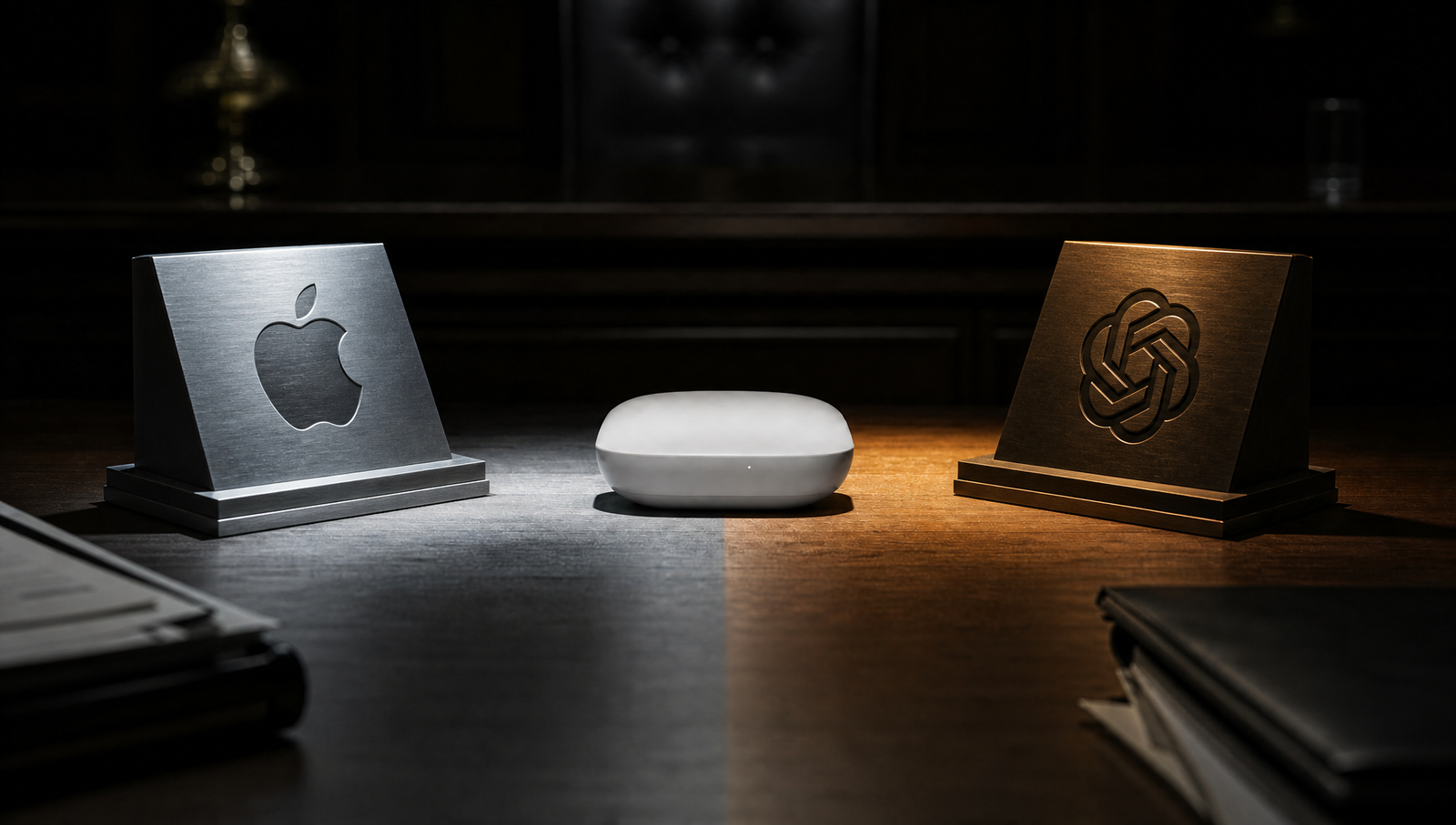

Apple says OpenAI’s push into AI hardware crossed a legal line, accusing the ChatGPT maker and several former Apple employees of misappropriating trade secrets rather than simply recruiting talent. The lawsuit, filed Friday in California, alleges confidential product information moved with key hires who later joined OpenAI’s hardware team.
- Apple sues OpenAI in California for allegedly misappropriating hardware trade secrets through key hires including Tang Tan.
- Former executives Tang Tan and Chang Liu reportedly retained confidential product designs before joining OpenAI’s new consumer hardware division.
- The litigation intensifies the competition between Apple and OpenAI to define the next generation of artificial intelligence hardware platforms.
Apple’s complaint centers on two former employees, Tang Tan and Chang Liu, whom it accuses of retaining confidential documents and disclosing proprietary information tied to Apple’s hardware development. OpenAI has not publicly responded to the lawsuit, and the allegations have not been tested in court.
The case, considered one of the highest-profile legal clashes, arrives as Silicon Valley’s biggest AI companies race to build AI devices that could eventually challenge smartphones. Apple argues that competition does not excuse the misuse of trade secrets, while OpenAI has not publicly responded to the allegations. The claims have not been tested in court.
What Apple Told the Court
Apple argues the lawsuit is not about preventing employees from leaving the company.
Instead, the complaint alleges former employees took confidential technical information with them after accepting positions at OpenAI.
Have a development worth tracking?
Share product launches, funding announcements, partnerships, research findings and market developments with The Grey Terminal's readership.
→ Submit a Press ReleaseAccording to the filing, Apple told the court that the case “is not about preventing employees from pursuing new employment opportunities.” Rather, it alleges the defendants misappropriated confidential information and trade secrets developed during their time at Apple.
Apple claims Tang Tan, who led iPhone and product design engineering before becoming OpenAI’s chief hardware officer, retained confidential files before departing the company. The lawsuit also alleges Chang Liu removed sensitive engineering materials connected to Apple’s hardware programs.
The complaint further alleges that confidential documents included product specifications, engineering designs, manufacturing information, supply-chain data and internal development plans that Apple says provide a competitive advantage.
Apple Says the Case Is About Trade Secrets, Not Hiring
A central theme running through Apple’s complaint is that companies remain free to hire competitors’ employees, but not to acquire confidential information through them.
Apple argues the alleged misconduct extended beyond employee recruitment and into the unlawful use of proprietary information. The filing asks the court to order the return of confidential materials, prevent further use of Apple’s trade secrets and award damages to be determined during litigation.
The Cupertino-based tech titan attempts to distinguish the lawsuit from ordinary talent competition, which is common throughout Silicon Valley, by framing the dispute this way,
The AI Hardware Race Behind the Lawsuit
The case comes as OpenAI expands beyond software into consumer hardware following its acquisition of io, the AI device startup founded by former Apple design chief Jony Ive.
Tang Tan became OpenAI’s chief hardware officer after leaving Apple, joining a growing team tasked with developing AI-powered consumer devices.
The lawsuit suggests Apple believes the competition over next-generation AI hardware has moved beyond recruiting experienced engineers into disputes over intellectual property.
Trade-secret litigation has become increasingly common as AI companies race to develop new hardware and computing platforms. Unlike patents, trade secrets protect confidential business information that derives value from remaining secret, making employee departures a recurring source of legal disputes.
Apple Wants More Than Damages
Apple is seeking monetary damages, the return of confidential information and court orders preventing any further use or disclosure of the alleged trade secrets.
The allegations remain unproven, and the court will ultimately determine whether Apple’s claims are supported by the evidence.
Activate Terminal Layer
Structural analysis of the systems, pressures, and stakeholders behind this story.