
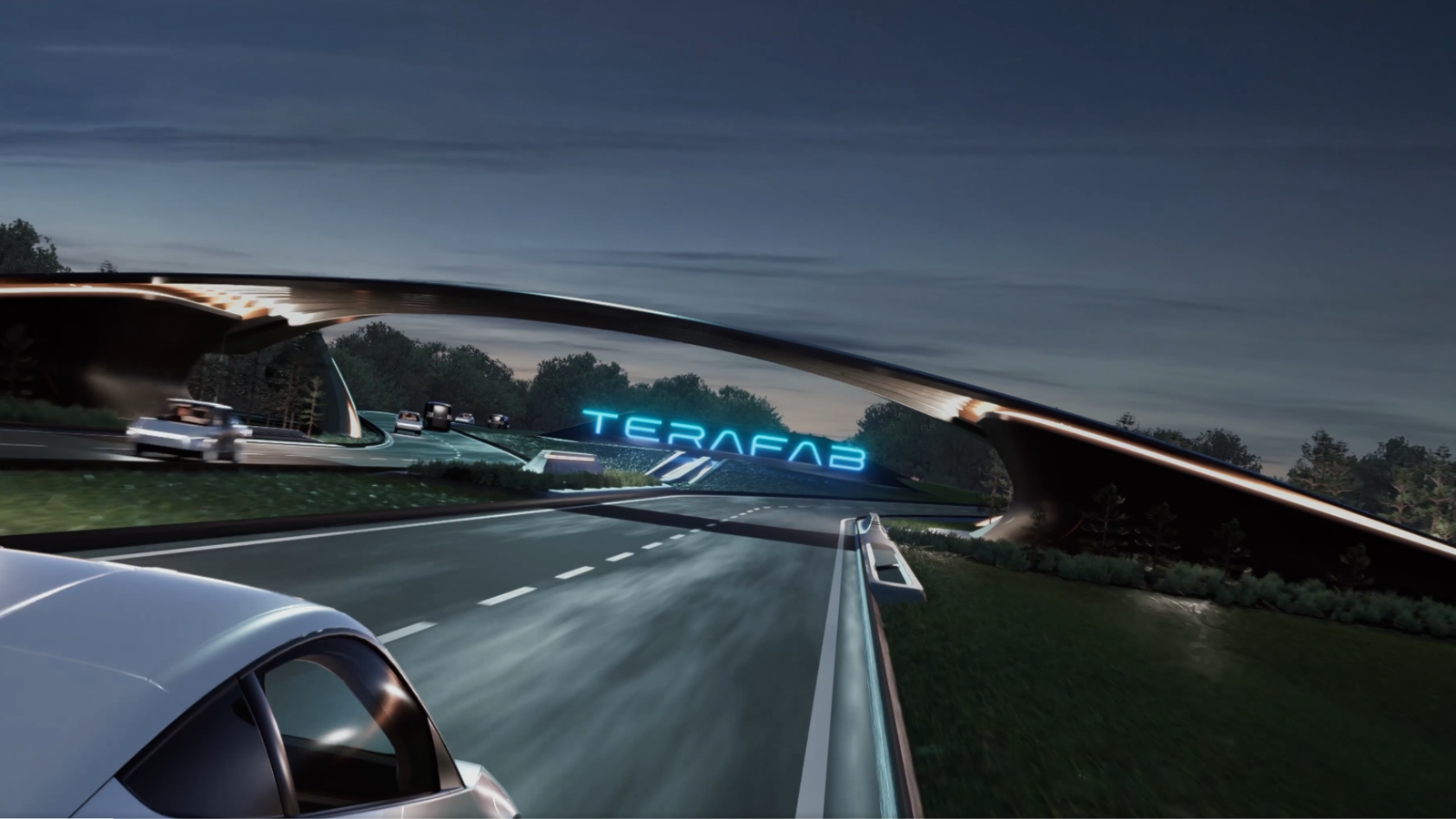

Elon Musk says the world cannot produce enough chips to meet the future needs of his companies. His answer is Terafab, a semiconductor complex planned for Grimes County, Texas, that will span more than 100 million square feet.
- Elon Musk says the world cannot produce enough chips to meet the future needs of his companies.
- Tesla and SpaceX said Aug. 6 they will initially invest $16.8 billion in the project, with construction expected to begin this year.
- "But that rate is much less than we would like." Tesla and SpaceX repeated the argument when they confirmed the Texas project, saying both companies "will need far more chips than current & future global production can supply." That supply gap is the stated reason for building Terafab rather than relying entirely on outside chipmakers.
Tesla and SpaceX said Aug. 6 they will initially invest $16.8 billion in the project, with construction expected to begin this year. The facility will produce chips for Tesla vehicles and Optimus robots, along with computing systems planned for SpaceX‘s space-based data centers.
Musk laid out the rationale in March. “So we either build the Terafab or we don’t have the chips, and we need the chips, so we’re going to build Terafab,” he said.
Musk’s Chip Supply Problem
Musk said in March that the combined capacity of the world’s semiconductor fabs represented only a fraction of what Tesla, SpaceX and xAI would eventually require. He said manufacturers including Samsung, TSMC and Micron were expanding, but not fast enough for his companies’ needs.
“There’s a maximum rate at which they’re comfortable expanding,” Musk said. “But that rate is much less than we would like.” Tesla and SpaceX repeated the argument when they confirmed the Texas project, saying both companies “will need far more chips than current & future global production can supply.”
Have a development worth tracking?
Share product launches, funding announcements, partnerships, research findings and market developments with The Grey Terminal's readership.
→ Submit a Press ReleaseThat supply gap is the stated reason for building Terafab rather than relying entirely on outside chipmakers.
Terafab Takes Shape in Texas
The first phase will cost $16.8 billion and is expected to create at least 3,000 jobs. Terafab is planned as a vertically integrated semiconductor operation combining chip manufacturing, memory production, advanced packaging and testing.
Intel is participating as a technology partner. The project is separate from Tesla’s chip work at Giga Texas near Austin, where the company has been developing advanced manufacturing capabilities.
The larger Terafab complex is planned north of Houston in Grimes County.
The Scale Goes Far Beyond the First Phase
The planned complex will cover more than 100 million square feet, making it several times larger by floor area than the world’s largest existing building, according to recent reporting. The broader project could eventually cost about $119 billion if later phases are completed.
That figure is not the current investment. Tesla and SpaceX have committed $16.8 billion to the initial phase.
The distinction matters because Terafab is being developed in stages. The $119 billion figure represents the potential full build, not money already committed.
What the Chips Will Power
Tesla plans to use Terafab chips for vehicles and Optimus, its humanoid robot program. SpaceX plans to use the computing hardware for its proposed space-based data centers.
The companies have said their combined requirements could eventually exceed 1 terawatt of computing power. That demand is central to Musk’s argument that existing semiconductor production will not be enough.
Instead of competing for limited capacity, Tesla and SpaceX are attempting to build more of it themselves.
Texas Incentives Draw Local Scrutiny
Terafab has also become a major local development project. Grimes County approved a property-tax abatement structure for SpaceX in June. Two local school districts later approved agreements involving as much as $1.66 billion in tax incentives.
Residents have raised concerns about infrastructure, environmental effects and the scale of the development. County officials have considered additional oversight as the project moves forward.
Musk first described Terafab as necessary because his companies could not secure enough chips from existing suppliers. Five months later, Tesla and SpaceX have committed $16.8 billion to begin building the capacity he said they would need.
Activate Terminal Layer
Structural analysis of the systems, pressures, and stakeholders behind this story.