

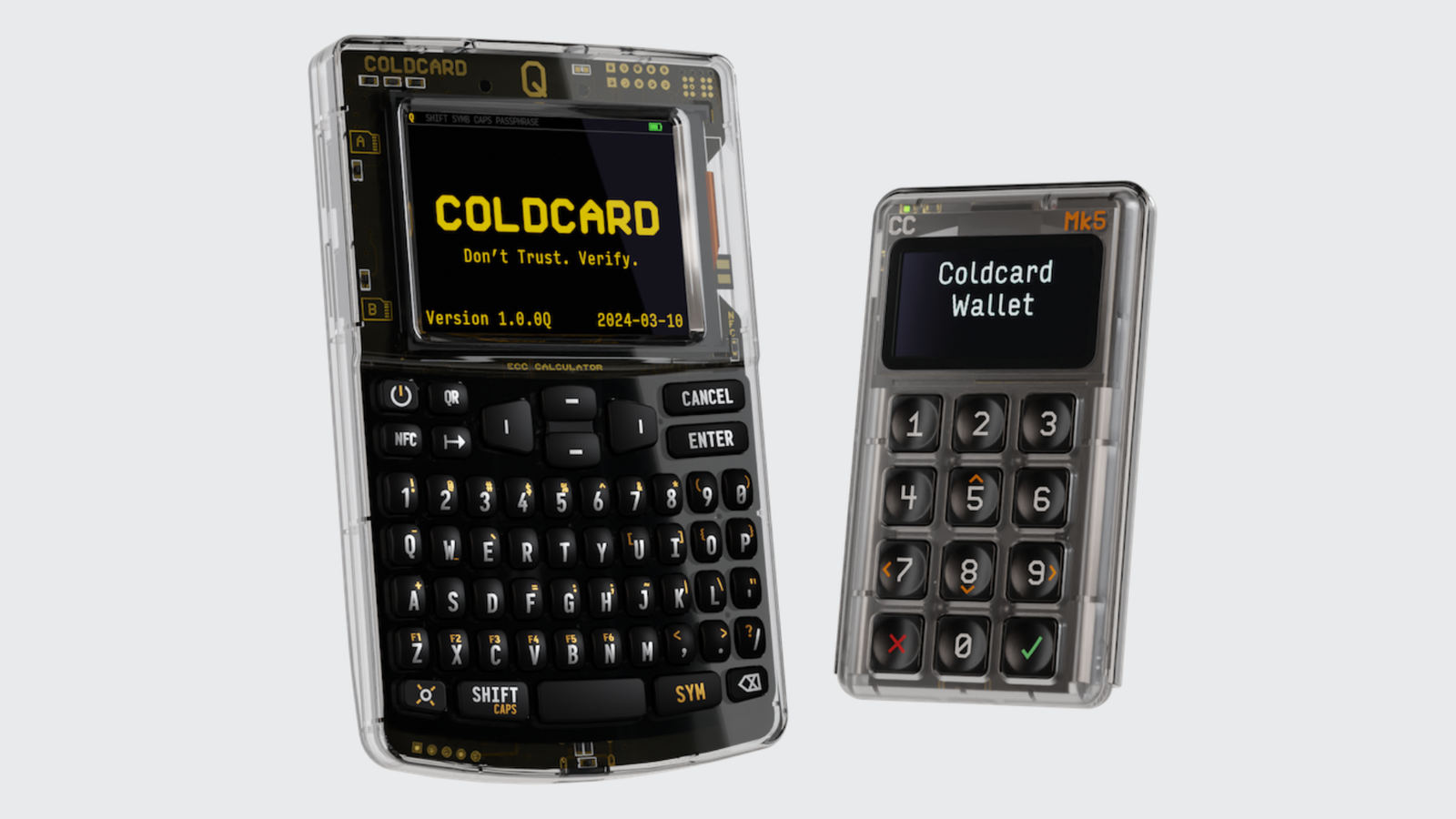

Nearly 600 bitcoin disappeared from hundreds of Coldcard hardware wallets in just over 15 minutes last week, but investigators say the attacker never breached the devices.
- A criminal actor drains 594.48 BTC from 500 Coldcard wallets by recreating a flawed recovery-seed generator in vulnerable 2021 firmware.
- The attacker exploits an entropy collapse from 128 bits to 40 bits to sweep millions in 15 minutes and 18 seconds.
- Coinkite identifies the firmware build error while researchers warn that hardware security features cannot protect wallets created with predictable recovery seeds.
An on-chain reconstruction by cybersecurity researchers at International Cyber Digest (ICD) found the wallets were emptied after the attacker recreated a flawed recovery-seed generator introduced in vulnerable Coldcard firmware. By generating every seed the affected software could plausibly produce and matching the resulting addresses against the public Bitcoin blockchain, the attacker identified funded wallets before sweeping 594.48 BTC from 500 addresses.
The reconstruction offers the clearest account yet of what researchers describe as the largest verified Coldcard wallet theft publicly traced on-chain. It also shifts attention away from the wallets themselves and towards a software build error that quietly reduced the randomness protecting newly created recovery seeds.
Attack Reconstructed On-Chain
Researchers said the theft unfolded across four consecutive Bitcoin blocks on 30 July, draining 594.48 BTC from 500 single-signature wallets in 15 minutes and 18 seconds.
The stolen funds were collected through 500 transactions involving 1,324 unspent transaction outputs before being consolidated into a single collection address. Most of the bitcoin was later transferred into another address holding approximately 562 BTC, where it remained at the time of publication.
Have a development worth tracking?
Share product launches, funding announcements, partnerships, research findings and market developments with The Grey Terminal's readership.
→ Submit a Press ReleaseThe affected wallets contained coins received between 2021 and 2026, matching the period during which vulnerable firmware versions were distributed, researchers said.
The transaction pattern showed no evidence of manual selection. Instead, ICD concluded the attacker identified valid private keys first and then automatically emptied every funded wallet linked to them.
Predictable Seeds Opened the Door
According to researchers, the attacker did not steal recovery phrases, bypass PIN protection or compromise Coldcard’s secure element.
Instead, they rebuilt the vulnerable seed-generation process using publicly available firmware.
The reconstructed generator produced the limited pool of recovery seeds that affected Coldcard devices could ever create. Each candidate seed generated a corresponding set of Bitcoin addresses, which the attacker compared against publicly visible blockchain records.
Every address containing funds immediately became a live target because the recreated recovery seed also reproduced the wallet’s private key.
Researchers said the attack relied entirely on offline computation and publicly available blockchain data.
Build Error Reduced Wallet Entropy
Coldcard manufacturer Coinkite traced the vulnerability to firmware released in March 2021.
The affected software was intended to generate recovery seeds using hardware-derived randomness. A build configuration error instead caused certain firmware versions to rely largely on predictable software values generated from device state and internal timing information.
Researchers estimated that affected Coldcard Mk3 firmware produced roughly 40 bits of entropy instead of the intended 128 bits.
That reduction transformed an effectively impossible search problem into one modern computing hardware could realistically enumerate.
Engineers at Block independently reviewed the vulnerable code path and confirmed the entropy collapse described by Coinkite.
Device Security Was Never Bypassed
The investigation found no weakness in Bitcoin’s cryptography.
Nor did the attacker defeat Coldcard’s PIN protection, secure element or air-gapped design.
Those protections continued to function as intended.
Researchers said the flaw existed before those defences came into play.
Once a predictable recovery seed had been recreated, every security feature on the device continued protecting a private key that the attacker already possessed independently.
ICD characterised the incident as a failure of randomness rather than encryption.
Which Wallets Face the Highest Risk
Coinkite said Coldcard Mk3 wallets that generated new recovery seeds using firmware released after March 2021 face the highest confirmed risk.
Later Coldcard models incorporated additional entropy sources, although some firmware remained below the intended security threshold until patched releases became available.
The company said users who generated wallets using substantial independently supplied dice entropy or protected funds with strong BIP-39 passphrases face significantly lower risk because those additional secrets cannot be reproduced through the vulnerable algorithm.
Coinkite has advised affected users to update to patched firmware, generate an entirely new recovery seed and migrate funds into a freshly created wallet.
Updating firmware alone does not secure wallets created with vulnerable recovery seeds because those private keys remain unchanged.
Why Researchers Say This Theft Stands Apart
Most cryptocurrency thefts begin with phishing attacks, malicious software or compromised exchanges.
ICD’s reconstruction points to a different sequence.
The attacker never needed to contact victims or interact with their devices. The vulnerable firmware produced a limited number of possible recovery seeds, allowing private keys to be regenerated offline and matched against publicly funded Bitcoin addresses.
Researchers said the attack illustrates how a failure during key generation can undermine every protection that follows, even when the wallet itself remains uncompromised.
Activate Terminal Layer
Structural analysis of the systems, pressures, and stakeholders behind this story.