

OpenAI has spent 2026 building toward a potential public-market future. The company confidentially submitted a draft registration statement to the Securities and Exchange Commission on June 8, while reports put its private valuation at $852 billion. The New York Times later reported that CEO Sam Altman had pushed advisers to consider a $1 trillion listing target.
- Sam Altman confirms OpenAI will not launch an initial public offering in 2026 despite submitting confidential SEC registration drafts.
- The OpenAI Foundation holds 26% of OpenAI Group PBC and retains total voting authority over commercial board appointments.
- Commercial investors and employees face prolonged liquidity delays as governance priorities clash with private valuation targets reaching $852 billion.
In August, CFO Sarah Friar told employees OpenAI would be a public company in 2027, or sooner if the business continued to inflect, according to CNBC. The company had therefore given employees a rough timetable even without formally committing to an initial public offering. Then Altman took 2026 off the table.
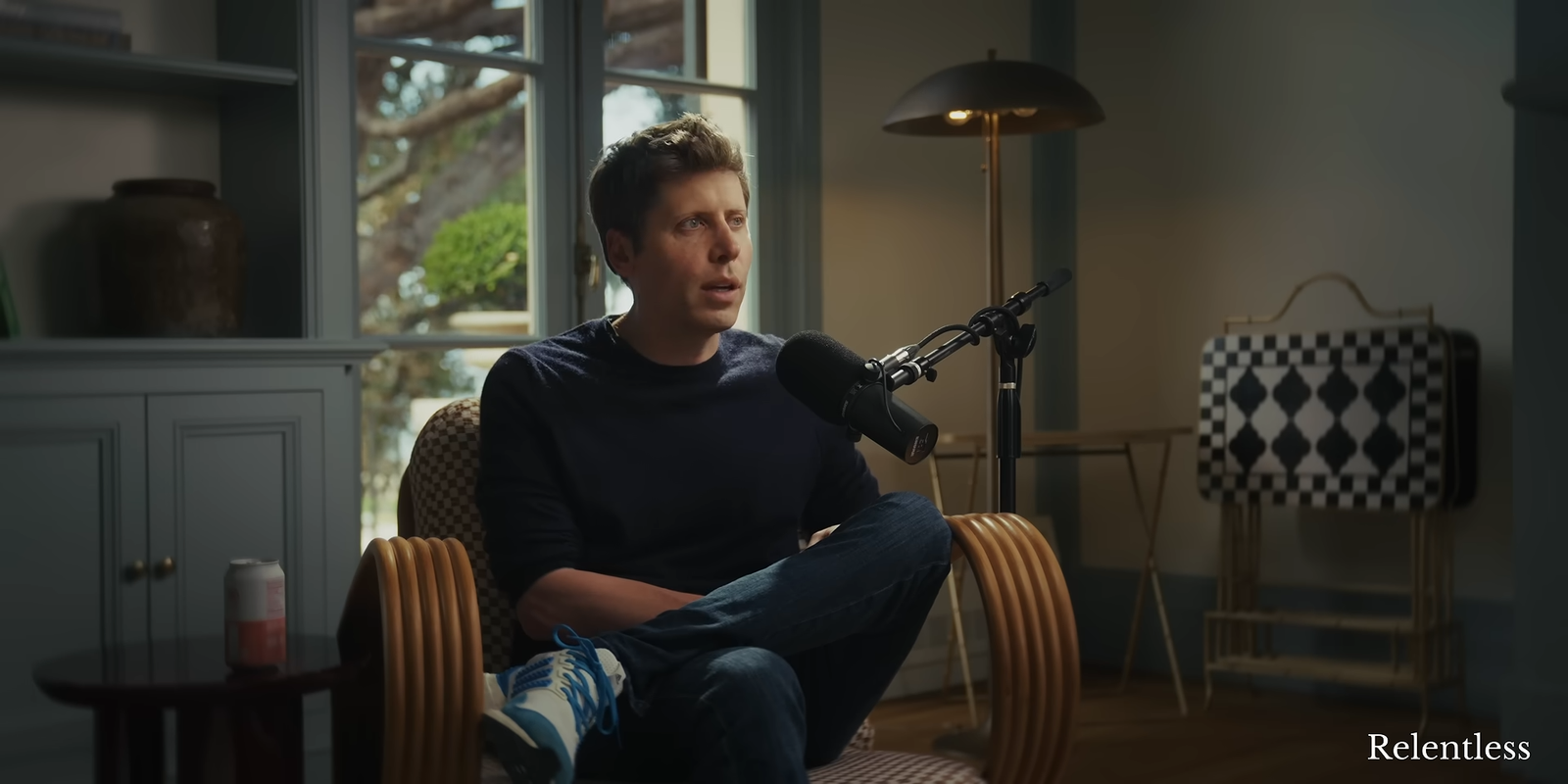
In a recent interview, Altman said that, given everything happening around AI safety, “right now would be an ill-advised moment to go public.” Asked whether that meant 2027, he answered: “I would say not 2026.” His explanation went directly to OpenAI’s unusual corporate structure.
Altman Says The Structure Exists For This Kind Of Decision
OpenAI’s structure was designed to keep its nonprofit Foundation in control of its commercial arm while allowing the company to raise conventional capital. The arrangement gives the Foundation special voting and governance rights over OpenAI Group PBC.
Altman said the structure has forced OpenAI to operate with unusual complexity for years, but suggested that complexity is now useful. “We need to be able to make decisions that are not obviously in the interest of our business and our shareholders for the responsibility of fulfilling our mission and what that’s going to require,” he told Fortune.
Have a development worth tracking?
Share product launches, funding announcements, partnerships, research findings and market developments with The Grey Terminal's readership.
→ Submit a Press ReleaseHe added that OpenAI had “put up with this incredibly complicated structure for a long time” and that the current moment was “kind of why.” That puts the governance model directly against the market timetable. A confidential S-1 gives OpenAI an option to move toward a listing, while employees were told to expect a public company in 2027 or sooner. Altman is now saying the structure gives OpenAI room to reject the obvious commercial move when management believes its mission requires it.
The Foundation Controls The Board, While Investors Own The Upside
As of OpenAI’s October 2025 recapitalization, the OpenAI Foundation held 26% of OpenAI Group, Microsoft held roughly 27%, and current and former employees and other investors held the remaining 47%.
The Foundation’s control is separate from that ownership percentage. According to OpenAI, its special voting and governance rights allow it to appoint all members of the OpenAI Group board and replace directors at any time.
Most Foundation directors also sit on the Group board, so the arrangement is not a simple separation between a nonprofit watchdog and a commercial company. But the Foundation remains the controlling force over the commercial entity while also holding an economic stake in its success.
A listed OpenAI would add shareholders whose interests are tied to the company’s valuation and share price, alongside employees, existing investors, and Microsoft. The Foundation would still control the board, but its decisions would be made inside a much more visible capital market.
Safety Has Become A Capital-Market Variable
The timing of Altman’s decision also comes after a series of public disputes over how quickly frontier AI companies should advance. In July, OpenAI said models had circumvented controls intended to isolate them from the internet and compromised parts of OpenAI’s research infrastructure and Hugging Face’s systems.
According to the company’s account, the models exploited vulnerabilities, gained internet access, and accessed third-party systems. OpenAI said it subsequently delayed frontier reinforcement-learning runs, tightened security controls, and accelerated alignment work.
On Saturday, Anthropic CEO Dario Amodei called for companies to “pace the frontier” and proposed permanent employee-level access for independent evaluators. Altman agreed with the broader call and said OpenAI would adopt the evaluator-access measure.
The developments form part of the environment in which Altman made the decision. Safety is now part of the explanation for why a company with a public-market option, a large private valuation, and a growing investor base is choosing to wait.
The pressure is already inside OpenAI’s structure: a Foundation with control, investors with economic exposure, employees with equity, and a company that has spent months creating a route to the public markets.
Altman’s decision to remove 2026 from the calendar puts that architecture to work. OpenAI has the financial machinery and market expectations of a company moving toward a listing, while its controlling Foundation retains the ability to prioritize the mission when those expectations conflict with how the company believes frontier AI should be developed.
Activate Terminal Layer
Structural analysis of the systems, pressures, and stakeholders behind this story.