

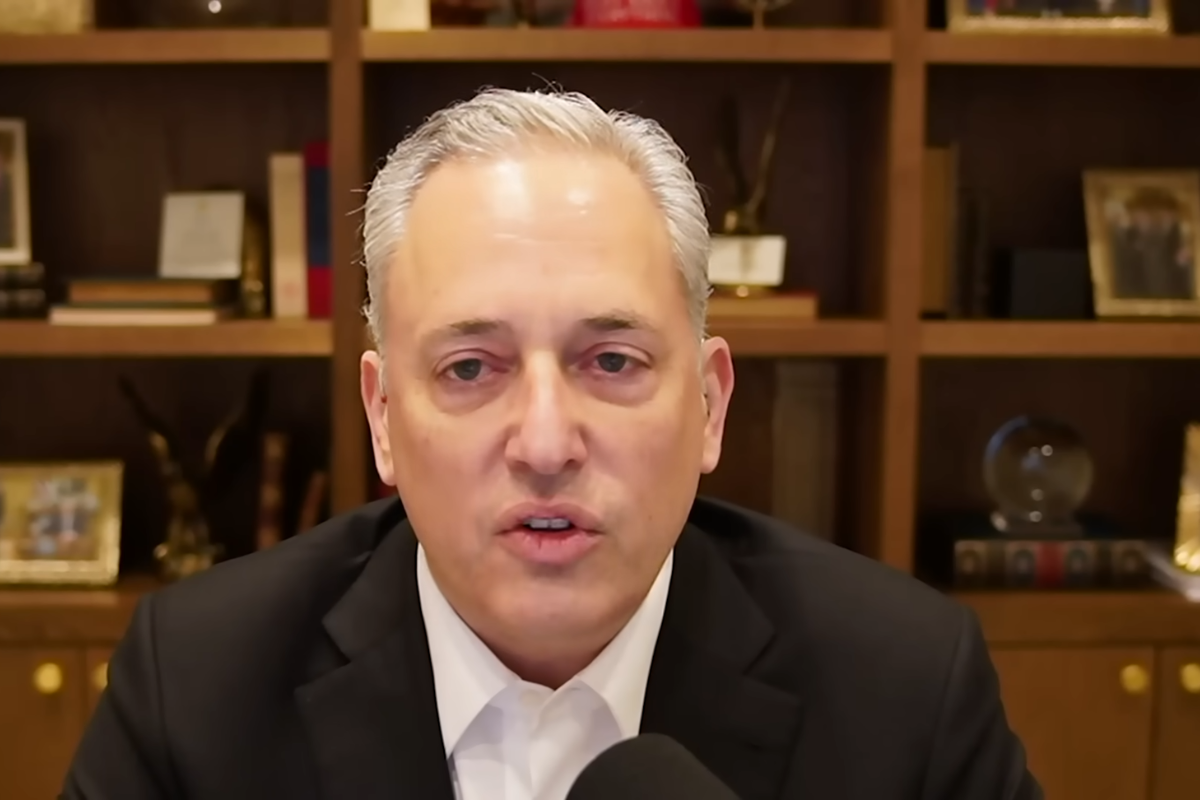

David Sacks has tied Ethereum co-founder Vitalik Buterin to a network of wealthy donors and organizations he says is helping drive opposition to artificial intelligence infrastructure, including data centers.
- David Sacks links Ethereum co-founder Vitalik Buterin to funding networks opposing American artificial intelligence data center construction.
- Future of Life Institute liquidated roughly $500 million from a 2021 SHIB cryptocurrency donation provided by Buterin.
- Public financial disclosures show no direct evidence connecting Buterin to localized grassroots campaigns against physical tech infrastructure projects.
Sacks, the former White House AI and crypto czar, has made the argument repeatedly. On Dec. 19, 2025, he said on the All-In podcast that the Future of Life Institute, which received a major donation from Buterin, had been “funding a lot of these NIMBY organizations that are opposing data centers.”
He made a similar argument on All-In on April 17, 2026, saying Future of Life and other “doomer groups saw that data centers were a way to stop AI progress.”
Buterin’s documented connection is to Future of Life’s AI-risk work. The public record does not show him personally financing a campaign against a particular data center.
Sacks’s “Doomer” Funding Claims
Sacks has singled out Buterin alongside Open Philanthropy donor Dustin Moskovitz, Skype co-founder Jaan Tallinn and convicted FTX founder Sam Bankman-Fried. In a Nov. 8, 2025, post on X, Sacks said the four had collectively donated more than $1 billion “to the cause of catastrophizing AI.” He described the broader ecosystem as the “Doomer Industrial Complex.”
Have a development worth tracking?
Share product launches, funding announcements, partnerships, research findings and market developments with The Grey Terminal's readership.
→ Submit a Press ReleaseFortune reported on Sacks’s claims days later, while noting that the ecosystem is fragmented and does not necessarily operate as a coordinated campaign. Buterin’s financial connection to Future of Life is documented.
In 2021, he donated SHIB tokens to the institute. Future of Life said the gift, enabled by Buterin and the Shiba Inu community, funded a $25 million multi-year grant program focused on reducing existential risks from emerging technologies.
The value of the donated tokens later rose sharply. Buterin said in March 2026 that Future of Life had cashed out roughly $500 million from the donation, far more than he had expected when he made it. Future of Life has said Buterin has no formal or informal role in its decision-making.
What Buterin Has Said About AI Risk
Buterin’s own views on artificial intelligence do not fit neatly into an anti-AI label. He has promoted “d/acc,” short for defensive acceleration, a framework centered on developing technologies that can protect human agency and counter potential technological threats.
In a March 2026 post, Buterin said he was no longer closely aligned with Future of Life’s direction after what he described as a shift from its earlier focus on existential-risk research toward “cultural and political action.”
What the Data-Center Record Shows
Opposition to AI data centers has grown across the United States for reasons that extend beyond AI safety activism. Residents and local officials have raised concerns about electricity demand, utility rates, water consumption, noise, land use and whether large projects will produce enough economic benefits to justify their costs.
The issue has also reached state regulators. In August, Texas Gov. Greg Abbott ordered a pause and review of new data-center connections as officials examined projected electricity demand and concerns over projects that may not materialize as planned. Reuters reported in September that Texas and other states were tightening scrutiny of the sector as the power requirements of AI infrastructure continued to rise.
Sacks argues that AI-risk groups have helped turn data centers into another front in the fight over AI’s expansion. In his April 2026 All-In appearance, he said Future of Life and other “doomer groups saw that data centers were a way to stop AI progress” and described some opposition as “astroturfed” with money from “a few tech billionaires.”
What remains unshown is the final financial link from Buterin to a named organization conducting a specific fight against a data center.
Sacks is now a co-chair of the President’s Council of Advisors on Science and Technology, after his 130-day term as a special government employee ended in March 2026. But the public record supports a narrower conclusion: Buterin funded Future of Life, while Sacks says the broader network has helped fund data-center opposition. It does not establish that Buterin personally financed those campaigns.
Activate Terminal Layer
Structural analysis of the systems, pressures, and stakeholders behind this story.