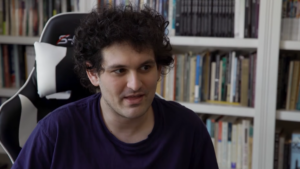



A North Carolina man who used thousands of automated accounts to stream hundreds of thousands of AI-generated songs billions of times was sentenced to 18 months in federal prison after collecting more than $8 million in royalties through fraudulent streams, federal prosecutors said October 6.
- A federal judge sentences Michael Smith to eighteen months in prison for stealing music streaming royalties using automated artificial intelligence bots.
- The court orders Smith to forfeit $8,091,843.64 after his network generated 80.9 million YouTube Music streams in April 2023.
- The landmark Southern District of New York ruling establishes criminal penalties for synthetic audio fraud amid opposition from digital streaming platforms.
Michael Smith, 54, of Cornelius, North Carolina, was also sentenced to two years of supervised release and ordered to forfeit $8,091,843.64, the U.S. Attorney’s Office for the Southern District of New York said. He pleaded guilty in March to one count of conspiracy to commit wire fraud. U.S. District Judge John G. Koeltl imposed the sentence in Manhattan federal court.
In April 2023, Smith’s bot accounts generated 80.9 million streams of his AI-generated music through YouTube Music family plans, according to prosecutors. Taylor Swift’s entire catalog received 9.3 million streams through the same type of plan that month. The comparison covered family-plan streams on YouTube Music, not every stream of Swift’s music across the platform or other services. Prosecutors said Smith sometimes operated as many as 10,000 bot accounts simultaneously.
How the Streaming Scheme Worked
The scheme ran from 2017 through 2024 and targeted Spotify, Apple Music, Amazon Music and YouTube Music, the Justice Department said. Smith created thousands of accounts using fake email addresses and fraudulently obtained debit cards, then used software to make those accounts repeatedly play songs he owned.
Artificial intelligence helped produce the volume of music needed. Prosecutors said Smith used the technology to generate hundreds of thousands of songs, allowing him to distribute automated plays across a large catalog rather than concentrate them on a few tracks. The strategy was intended to avoid unusual activity on individual songs that could alert streaming services to the fraud.
Have a development worth tracking?
Share product launches, funding announcements, partnerships, research findings and market developments with The Grey Terminal's readership.
→ Submit a Press ReleaseStreaming services distribute royalties based in part on reported listening activity. By making automated accounts appear to be genuine listeners, Smith generated plays that produced royalty payments without corresponding real audience demand. The Justice Department said the scheme yielded more than $8 million in fraudulent royalties.
Sentence Below Prosecutors’ Request
Prosecutors had asked Judge Koeltl to impose at least 46 months in prison, the lower end of a 46-to-57-month range under federal sentencing guidelines. The U.S. Probation Office recommended 24 months, while Smith’s attorneys sought probation without prison time, according to Music Business Worldwide. The judge imposed an 18-month term.
The defense argued that the overall financial loss overstated the amount Smith personally kept and that no individual recording artist or songwriter suffered an appreciable loss from the scheme. His attorneys also argued that using AI to create music and distributing it through streaming services was not inherently unlawful, according to the sentencing coverage. The $8,091,843.64 forfeiture figure was agreed upon by both sides and was separate from the prison term and supervised release.
First Criminal Case Involving AI-Assisted Streaming Fraud
The Justice Department described the prosecution as its first criminal case involving music-streaming fraud assisted by artificial intelligence. Smith was initially charged in September 2024, when prosecutors alleged that he had obtained more than $10 million in royalties. His March 2026 guilty plea narrowed the case to one count of conspiracy to commit wire fraud.
The Music Fights Fraud Alliance, an industry group focused on combating streaming manipulation, urged a substantial sentence before the ruling, arguing that the outcome would signal the legal consequences of streaming fraud. The International Federation of the Phonographic Industry, which represents the global recorded-music industry, said after sentencing that the result sent a message that streaming fraud carries serious consequences and called for continued efforts to prevent and detect manipulation.
U.S. Attorney Jamie McDonald said Smith had used automated bots in place of consumers and fake songs in place of genuine creative output. The Justice Department’s October 6 statement used the term “super intelligence” to describe the technology, although its March announcement of Smith’s guilty plea referred to it as artificial intelligence. The sentence followed Smith’s guilty plea to the fraud conspiracy.
Activate Terminal Layer
Structural analysis of the systems, pressures, and stakeholders behind this story.